
Connect with us to share a few details about your property and our team will review how tree removal or preservation could impact your home’s property value.
The 2025 action builds on the 2023 code by embedding tree-protection into the city’s broader equity and canopy goals. Mayor Harrell’s Executive Order mandates development of a “One Seattle Tree Fund,” prioritizes tree plantings in under-canopied communities, and directs city departments to treat tree removal and preservation as part of housing and environment planning.
In many cases, yes. Seattle requires permits for removing protected Tier 1 and Tier 2 trees, trees involved in development activity, or trees located in environmentally critical areas. Smaller trees under 6 inches DSH typically don’t need a permit, but anything larger may trigger review from Seattle’s Department of Construction & Inspections. It’s always best to confirm requirements directly with SDCI before removing any tree.
In Seattle, you can remove some trees without a permit, but only if they are small or unregulated. Trees under 6 inches DSH (diameter at standard height) generally do not require a permit, as they are not covered under SMC 25.11. Larger trees — especially Tier 1 and Tier 2 — almost always require city approval through SDCI. Always confirm with the city first, since trees in ECAs or tied to development have stricter rules.
Based on feedback from local builders, tree removal permits typically take7 to 45 days depending on the tree’s size, health, species, and level of review. Larger Tier 1 or Tier 2 trees require more scrutiny under SMC 25.11, which lengthens review times. Hazard cases may move faster if documentation is clear.
Under Seattle’s old rules, an “exceptional tree” was one with special size, species, or ecological value, defined in the former Director’s Rule 16-2008. Seattle replaced that system with a four-tier classification in the updated Tree Protection Code. Most trees that were previously considered “exceptional” now fall under Tier 2, which covers trees 24 inches DSH or larger, certain species, and groves.
It depends on the buyer type. Live-in buyers often pay more for mature trees because they add shade, comfort, beauty, and curb appeal. Builders may value the property less if large protected trees limit buildable area or complicate permits. In short, trees can raise value for traditional buyers but lower value for redevelopment buyers.
Protected trees usually do not deter traditional buyers and can be a selling point if they enhance the yard or appearance. However, they can make the property less attractive to builders if the trees restrict where new structures or ADUs can go. Builders may offer less if protected trees reduce buildability. The impact depends heavily on the likely buyer.
In Seattle, trimming is allowed only on your side of the property line and only if it does not harm the tree. Large protected trees on a neighbor’s lot can still restrict where you can build if work on your side would damage the root zone or canopy under SMC 25.11. Builders often discount properties where neighboring protected trees shrink the buildable envelope. Hazard concerns can be reviewed through SDCI.
Yes, especially for builder buyers, because removal permits for Tier 1 and Tier 2 trees can take time and involve arborist reports and detailed review. Having approval in place removes uncertainty during feasibility and expands buildable area. For traditional buyers, the impact is smaller unless the tree was hazardous or obstructing use.
Yes, Seattle’s tree-removal rules vary depending on your zoning and whether the property is undergoing development. In single-family zones, most larger Tier 1 and Tier 2 trees require a permit, while smaller non-protected trees may not. In multifamily and commercial zones, removal rules are stricter during development because projects must preserve or replace protected trees and meet additional landscaping standards under SMC 25.11. You can review these zoning-specific requirements through Seattle’s tree code and SDCI’s permit guidance.
Protected trees appeal strongly to traditional buyers when framed as shade, privacy, and natural beauty. If they cannot be removed because they are exceptional or Tier 2, the home is usually best marketed either to live-in buyers or flippers rather than builders. A professional arborist can help document tree health to reduce buyer concerns. Highlighting maintenance history, canopy benefits, and usable outdoor spaces improves buyer confidence.
If Seattle approves the removal of a protected tree, you must either plant replacement trees or pay an in-lieu fee based on the tree’s size and classification. Replacement trees must usually be planted on the property, sized according to code, and maintained to ensure survival. These rules apply to most Tier 1 and Tier 2 removals and all removals tied to development.
This is a common misconception. Both homeowners and builders must follow the same tree code, and in many cases the city is even stricter with builders under SMC 25.11. Builders simply succeed more often because they know which trees are removable before applying and understand the permitting steps. Homeowners should consult an arborist or a local expert like Georgia Buys before deciding whether removal is possible.
Removing a protected tree without permission can lead to significant fines, often based on the tree’s appraised value and tier. Washington’s timber-trespass laws also allow triple damages in some cases. The city may require replacement trees, restoration work, or stop-work orders on active development projects. In serious cases, penalties can exceed the cost of doing the process correctly.
Tree size is measured as DSH (diameter at standard height), which means measuring the trunk’s diameter 4.5 feet above the ground. If the trunk swells, forks, or has branches at that height, measure at the nearest narrow point below 4.5 feet; on a slope, measure from the upper side. For multi-trunk trees, combine the trunk sizes using the formula: DSH = √(trunk1² + trunk2² + trunk3² …).

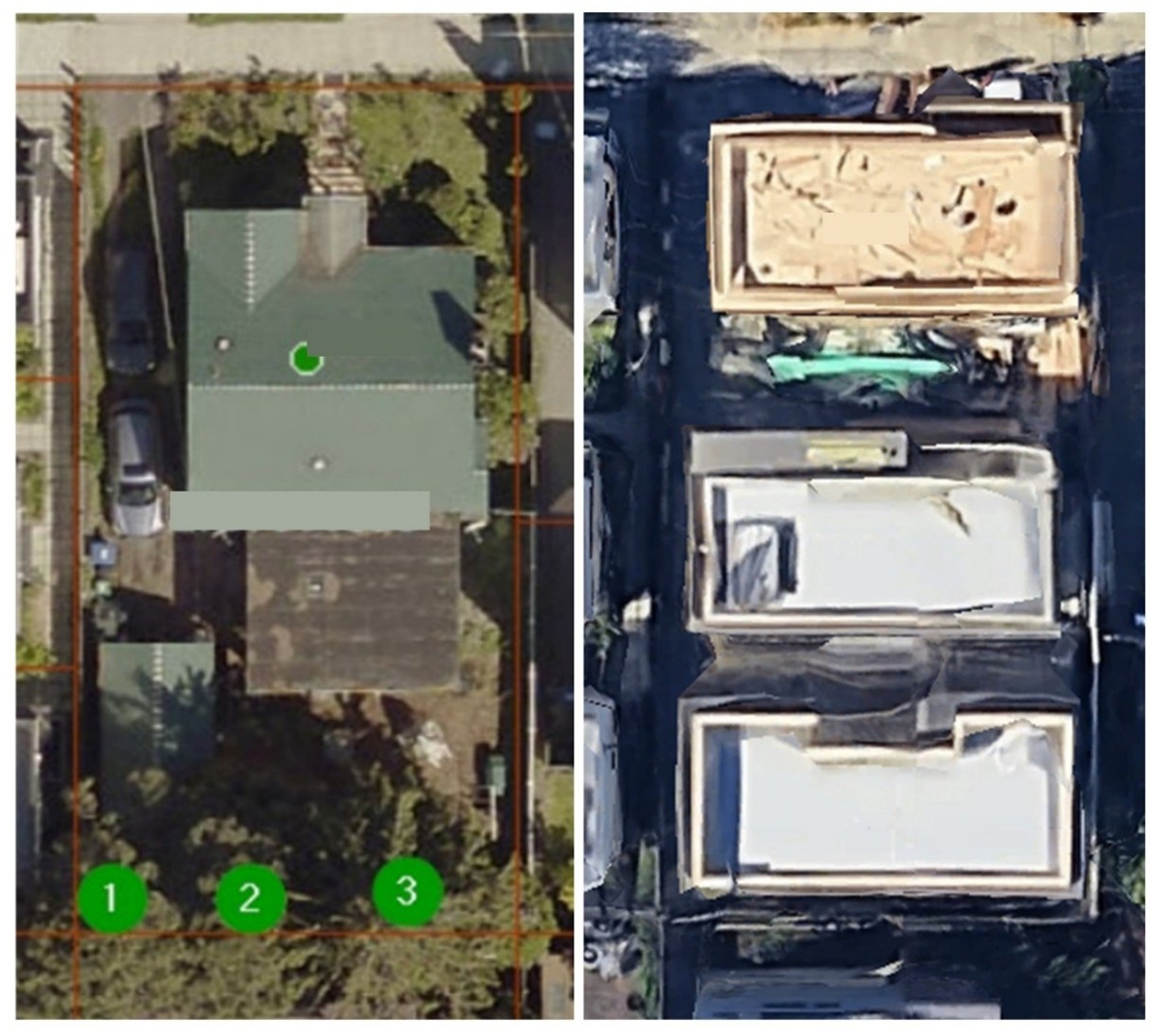
In 2022, Georgia Buys worked with a homeowner in Northwest Seattle who owned a single-family house on a deep lot with three large trees along the back fence line. The homeowner wanted to sell but was unsure if tree removal would be possible or worthwhile.
We brought in a certified arborist familiar with Director’s Rule 7-2023: Designation of Tier 2 Trees to determine whether the trees could be legally removed. Because they were not classified as “exceptional” and were outside an environmentally critical area, the City confirmed that removal approval was likely.
The homeowner applied through Seattle’s Tree Removal and Vegetation Restoration Application and moved forward with clearing the back of the lot. The results were significant:
With the trees cleared, the property was approved for an additional townhome unit. What began as a three-bedroom, 1,800-square-foot home eventually became a ten-bedroom, 5,800-square-foot project.
This single step of getting tree removal approval before the sale made the difference between a standard offer and a top-dollar outcome.
“Trees are great. But how they affect the value of your property, and what you can build can be confusing.
Across the Seattle area, new state and local laws are encouraging residential development to increase housing supply and affordability. The intent is clear, but figuring out whether you can actually build on a particular lot under the new Seattle tree code is anything but simple.
The value of a property often comes down to what can be built—how many homes, their size, and amenities like garages or parking. But things like wetlands, slope, and trees can all limit a site’s buildability.”
“When I work with sellers whose properties have development potential, one of the first things I look at is how trees might impact the buildable area. Most agents don’t realize how much trees can affect what can actually be built.
If a property looks like a teardown, I check for trees six inches or larger, both on the lot and on neighboring properties. When I find them, I always recommend that my clients get an arborist report early on. That report gives us clear information about the buildable square footage and helps avoid surprises later in the sale process.
The difference can be huge: losing even one potential unit can mean a reduction of $100,000 to $500,000 in sale price.”
“I’ve designed over 300 projects in Seattle since 2006 and have seen how tree codes have become increasingly strict and complex. SDCI reviewers now use more discretion, often requiring revisions even when a design meets encroachment limits within tree drip lines.
It’s crucial to involve a knowledgeable arborist early to assess potential impacts by tree species and site conditions.
The good news is that Seattle’s newer codes reward tree preservation. Protecting a Tier 2 tree can allow reduced setbacks, smaller amenity areas, and fewer parking spaces. While it can complicate development, understanding these incentives can help offset the challenges.”
By working with Georgia Buys, a portion of selling your house supports Seattle’s Union Gospel Mission—helping those in need and strengthening our city. Learn more here!